Client
Money2069
Year
2025
Industry
Monetary Systems & Financial Infrastructure
Money2069 is a long-term research and coordination initiative exploring the foundations of a neutral, state-free monetary standard designed to endure beyond current political and technological cycles. It approaches money not as a product, but as a core piece of civilizational infrastructure that must remain credible across borders, generations, and changing economic conditions.
The project began as a manifesto and conceptual framework, outlining a critique of existing monetary regimes and proposing an alternative approach centered on stable spending power, neutrality, and long-term alignment. Rather than positioning itself as a single currency or protocol, Money2069 defines a shared standard and an open institution intended to coordinate researchers, builders, capital, and culture around this goal.
My involvement focused on shaping how this vision is expressed and structured. This included helping translate abstract economic and philosophical ideas into a coherent narrative, clarifying the role of the institution, and framing the system in a way that could be understood, carried, and built upon by others over time. The work required balancing rigor with accessibility, ensuring the ideas could resonate without collapsing into slogans or technical jargon. A central challenge was designing something meant to last for decades. Unlike typical startup or product work, the project operates on a multi-generational horizon, with explicit resistance to short-term incentives, venture cycles, and political capture.
PROBLEM
Systemic fragility
Modern monetary systems are tightly coupled to nation-states, political cycles, and short-term incentives. While these systems can function for extended periods, they repeatedly fail under stress through debasement, inflation, or abrupt resets. As global coordination increases and economic activity becomes more abstract and automated, this fragility becomes a structural risk rather than a periodic inconvenience. Money remains one of the least upgraded pieces of critical infrastructure despite its central role in human coordination.
Short-term bias
Even when better monetary designs are theoretically possible, existing incentive structures work against their creation and stewardship. Governments optimise for control and discretion, while venture-driven models optimise for exits and near-term extraction. This misalignment makes it difficult to fund, govern, and maintain monetary systems intended to operate over decades or centuries. The problem is not a lack of ideas, but the absence of institutions designed to protect neutrality and long-term intent.
Fragmentation
Research, capital, and builders interested in alternative monetary systems remain fragmented across disciplines, geographies, and incentives. Without a shared standard or coordination layer, efforts remain isolated, duplicative, or captured by narrow interests. The absence of a common framework makes it difficult for new monetary approaches to reach critical mass or persist long enough to compete with entrenched systems.
Narrative collapse
Money is treated primarily as a technical or economic instrument, stripped of shared meaning, values, or long-term narrative. As a result, monetary change is framed either as a policy debate or a speculative opportunity, rather than as a civilizational design problem. Without a coherent narrative that can be carried across generations, even well-designed systems struggle to gain legitimacy, persistence, or broad participation. The problem is not only how money functions, but how it is understood, trusted, and culturally sustained over time.
VIEWS
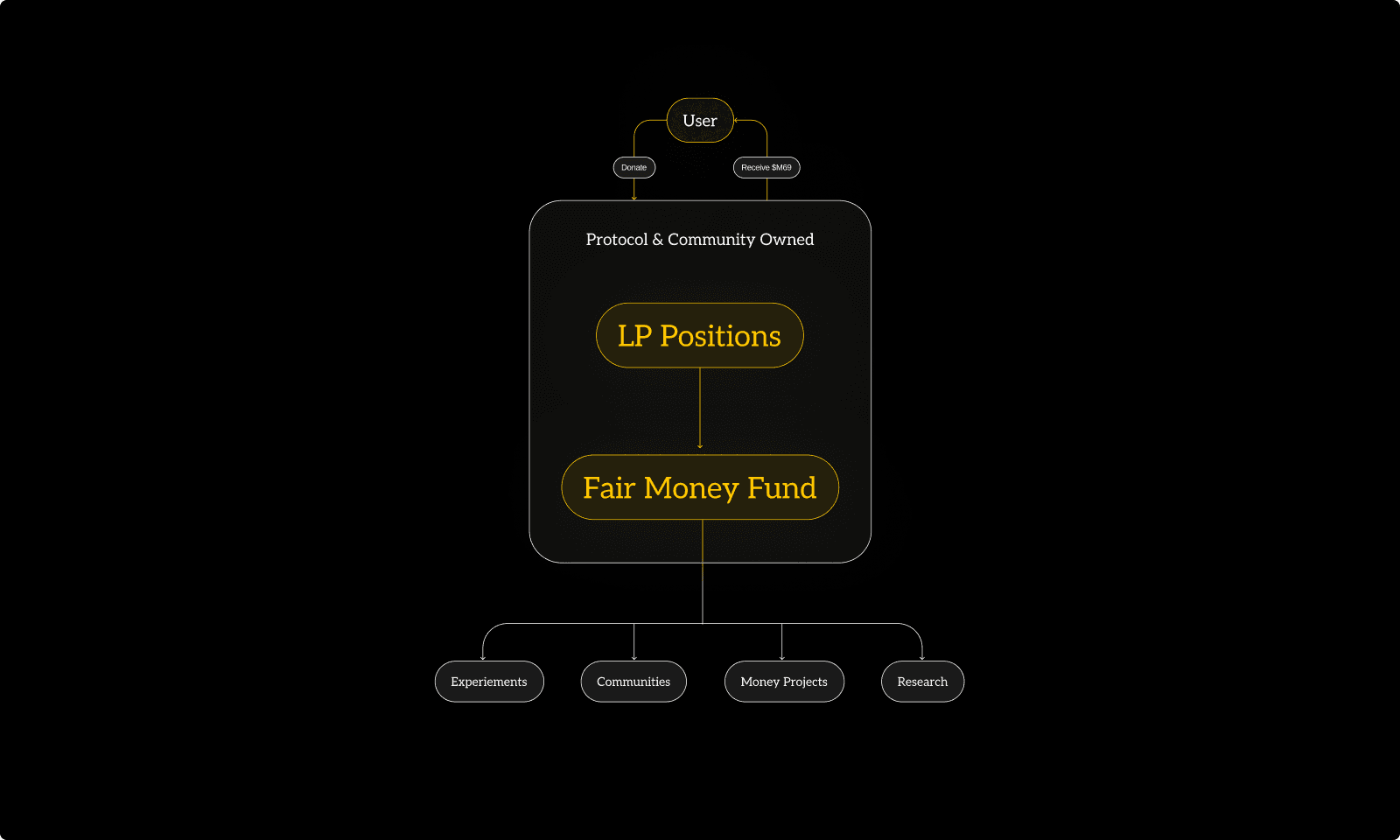
The flow diagram abstracts the protocol into core relationships rather than surface interactions. It prioritises structural clarity over feature detail, ensuring that the system can be understood as a framework for coordination rather than a fixed product. The emphasis is on coherence and neutrality, not technical complexity.
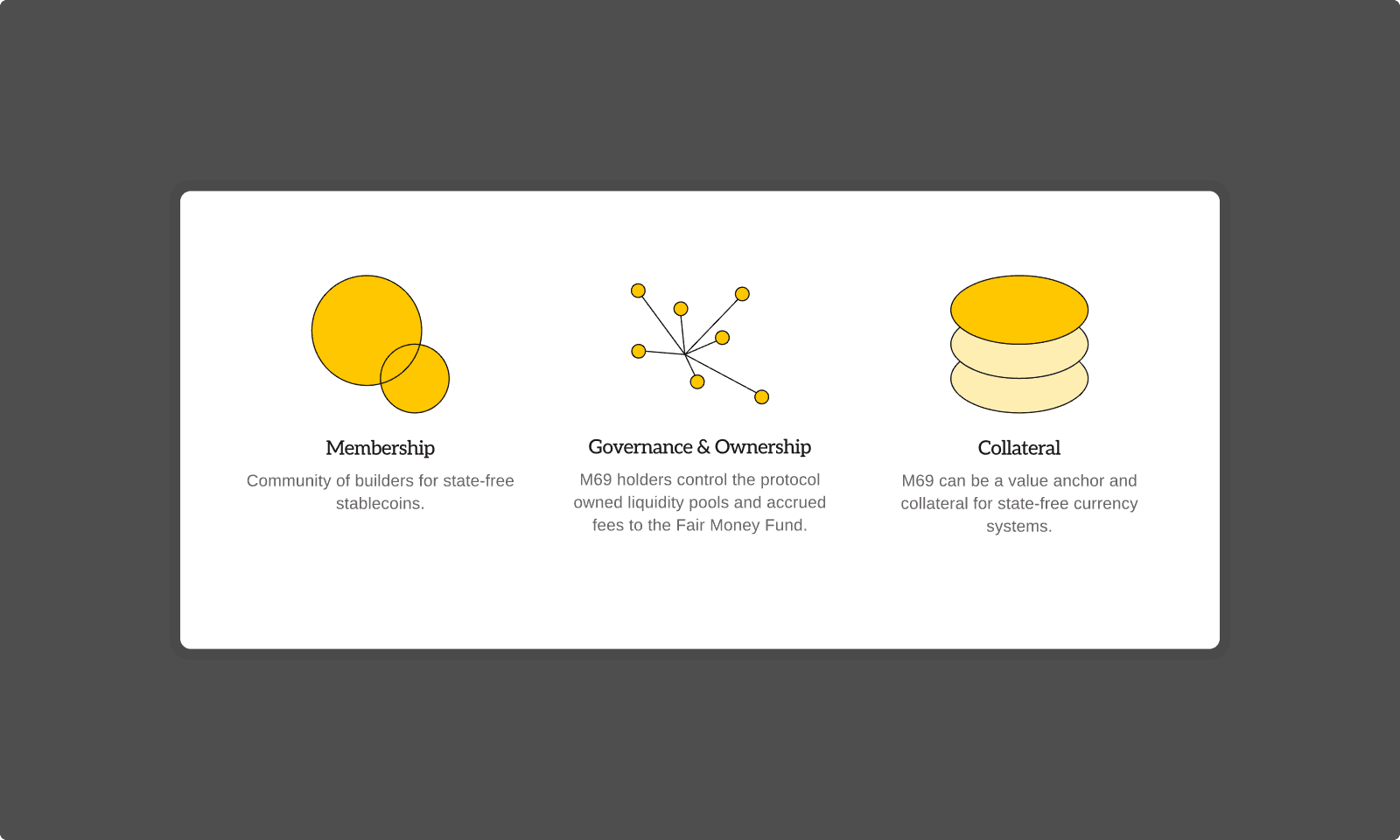
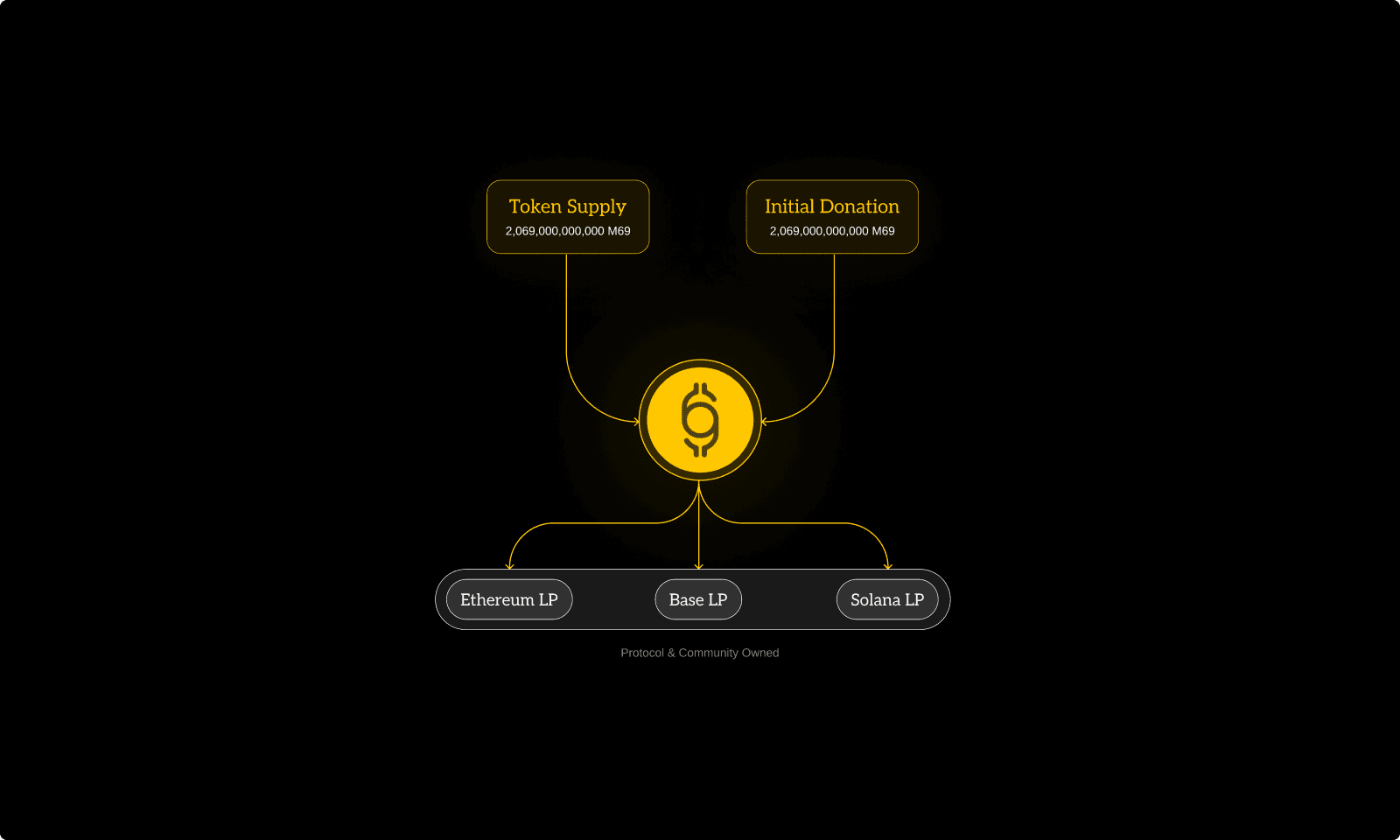
Minting is structured around open participation rather than insider allocation. By linking supply to voluntary contribution, the system embeds community ownership into its foundation. The emphasis is not on distribution mechanics alone, but on signalling alignment and reducing structural privilege from the outset.

RESULTS
A clear and publicly articulated monetary creed establishes non-negotiable values around neutrality, stability, and long-term stewardship, reducing ambiguity around institutional intent.
Initial supply mechanisms avoid preferential insider distribution, reinforcing neutrality and aligning funding with voluntary participation.
The project explicitly frames its objective across a multi-decade timeline, shifting decision-making away from quarterly optimisation toward generational durability.
By separating institutional governance from implementation specifics, the project defines a portable standard that can persist independently of individual protocols or market cycles.
Money2069 illustrates how design can operate at the level of ideas, institutions, and long-term coordination. The work is less about shipping features and more about creating structures that allow others to build, debate, and contribute over time without losing coherence or intent.
This project reflects my ability to work in highly abstract, high-stakes problem spaces where the outcomes are not immediate and the constraints are philosophical as much as technical. It required restraint, clarity, and a willingness to design for futures that cannot be fully specified today.
Money2069 is not a finished system, and it is not meant to be. It is a foundation, deliberately incomplete, designed to invite stewardship rather than ownership. That posture aligns closely with how I approach design in complex, long-horizon environments.
