Client
Staking Summit
Year
2025
Industry
Digital Assets & Financial Infrastructure
Staking Summit is a global, institutionally focused conference platform built to support the evolving proof-of-stake and yield ecosystem. The project spans multiple cities and regions, with each edition operating as a standalone event while remaining part of a coherent, long-term system.
My role was to design and scale the foundations of the Summit from the ground up. This included defining the brand system, establishing a visual and structural language that could adapt across locations, and creating the design infrastructure required to support speakers, sponsors, partners, and production teams at scale.
PROBLEM
Institutional gap
As the staking and yield ecosystem matured, the primary audience shifted toward infrastructure providers, allocators, and long-term participants. However, most existing conference formats continued to optimise for retail scale, hype, and surface-level engagement. This created a mismatch between audience needs and event environments. Serious participants lacked spaces designed for credibility, depth, and sustained discussion.
Multi-city complexity
Designing a single event is a contained problem. Designing a recurring platform across cities, venues, and teams introduces structural complexity that does not resolve on its own. Without shared systems, each edition risks becoming bespoke, increasing inconsistency, operational overhead, and design debt as the platform grows.
High-trust audience
The Summit serves participants operating in high-trust environments, where decisions involve capital, infrastructure, and long-term commitments. In these contexts, ambiguity, visual noise, or inconsistency quickly undermine confidence. The challenge was not attracting attention, but maintaining trust across physical spaces, digital touchpoints, and repeated interactions over time.
One-off bias
Events are commonly treated as isolated outputs, with design effort peaking and resetting each year. This approach does not scale and makes continuity difficult for both teams and returning participants. The underlying problem was the absence of a platform mindset capable of supporting reuse, iteration, and long-term growth.
VIEWS


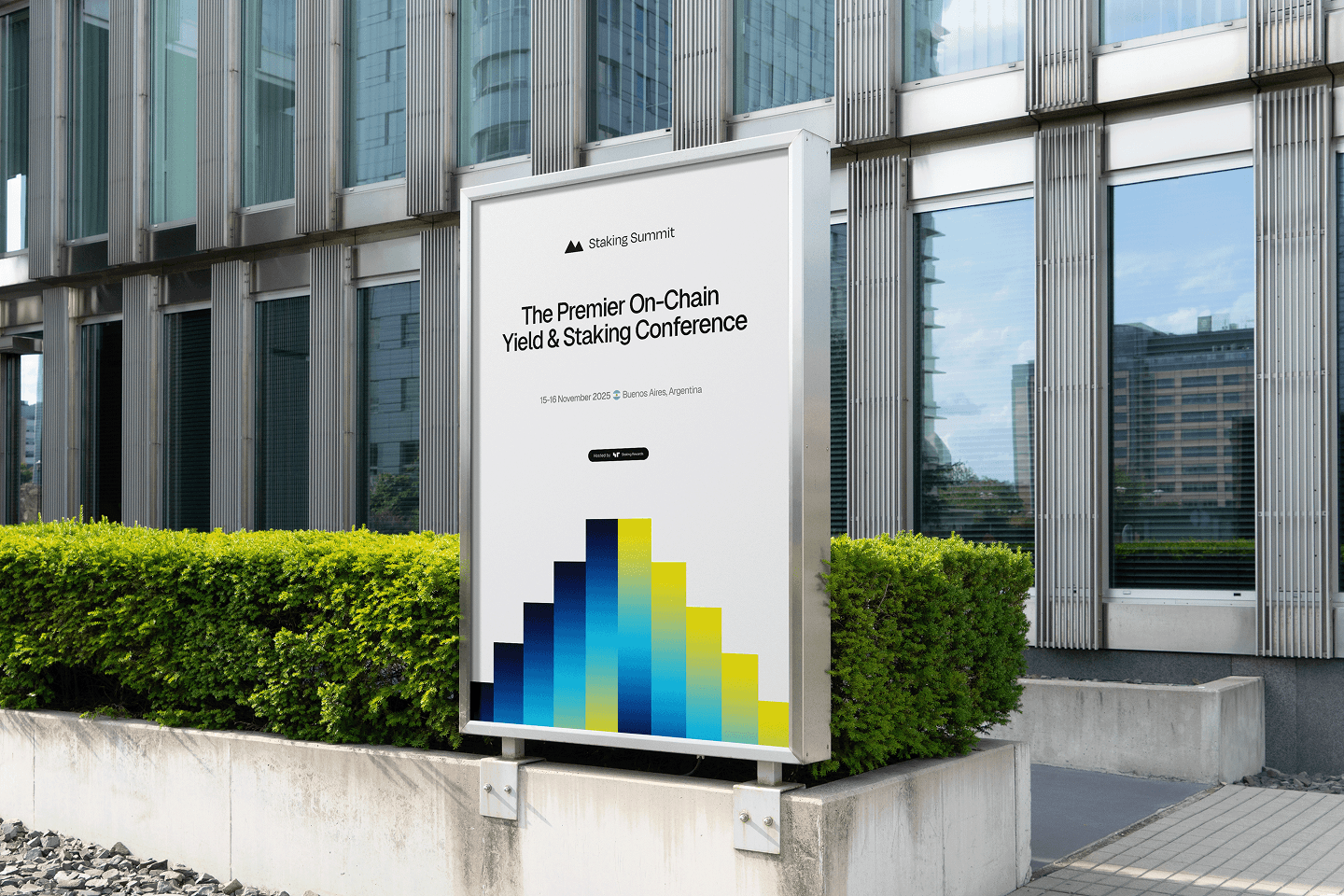
Beyond brand expression, the work extended into real-world execution. Every design decision needed to function across physical environments, digital platforms, and operational workflows, often under tight timelines and real-world constraints.
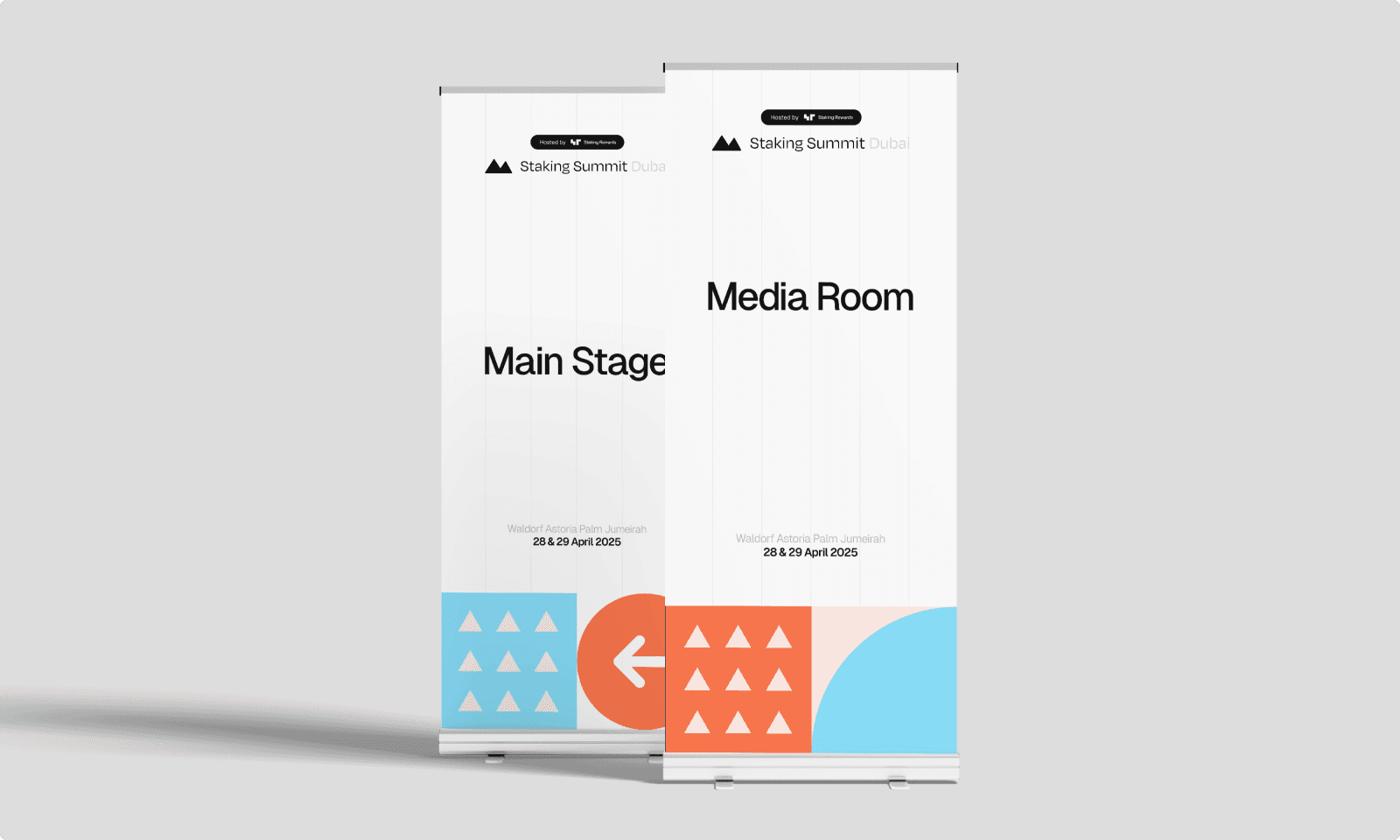
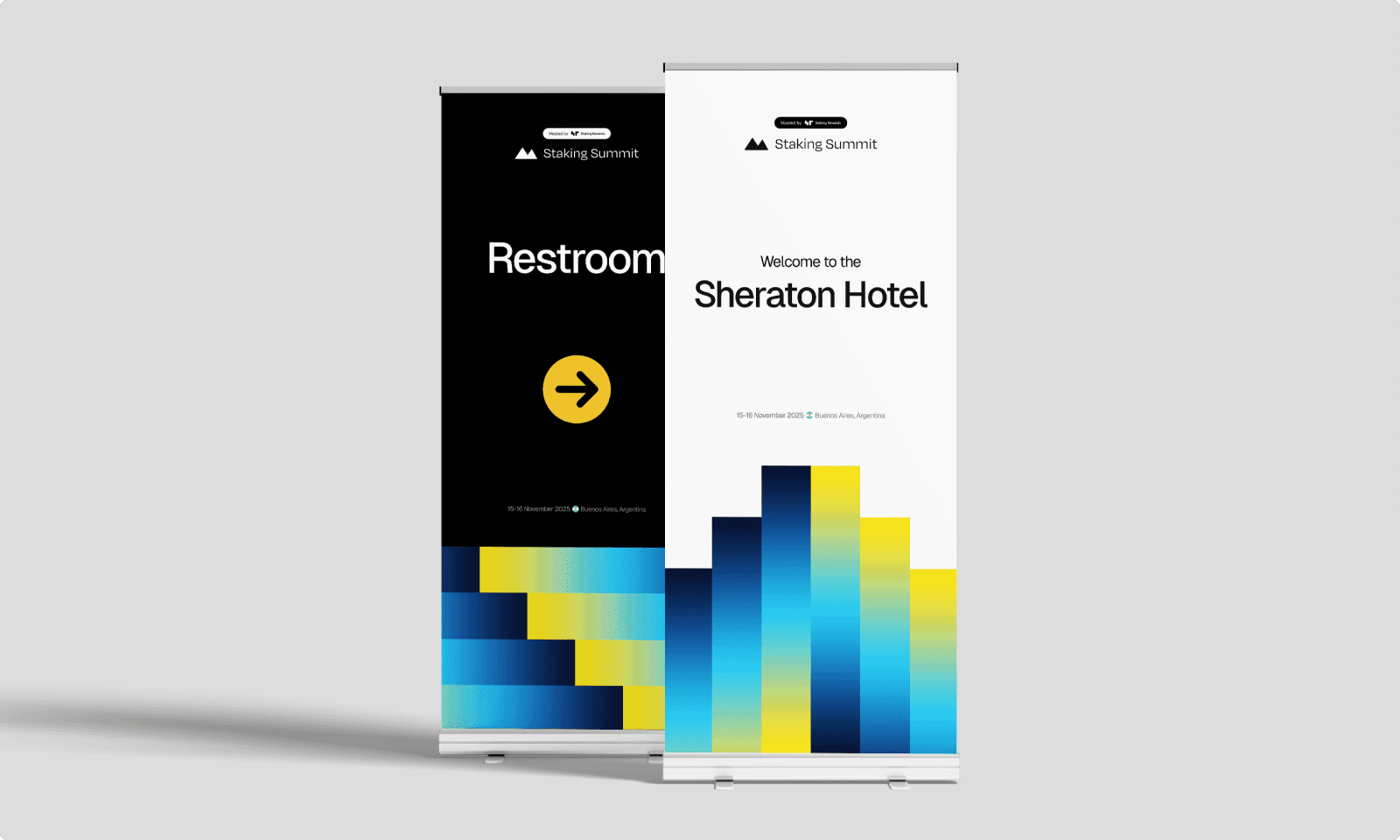
Typography, hierarchy, and spatial rules were defined to remain consistent across formats and dimensions. This allowed assets to scale across cities while preserving recognisability and institutional tone. The system was built to function reliably in real production environments, not just in mockups.
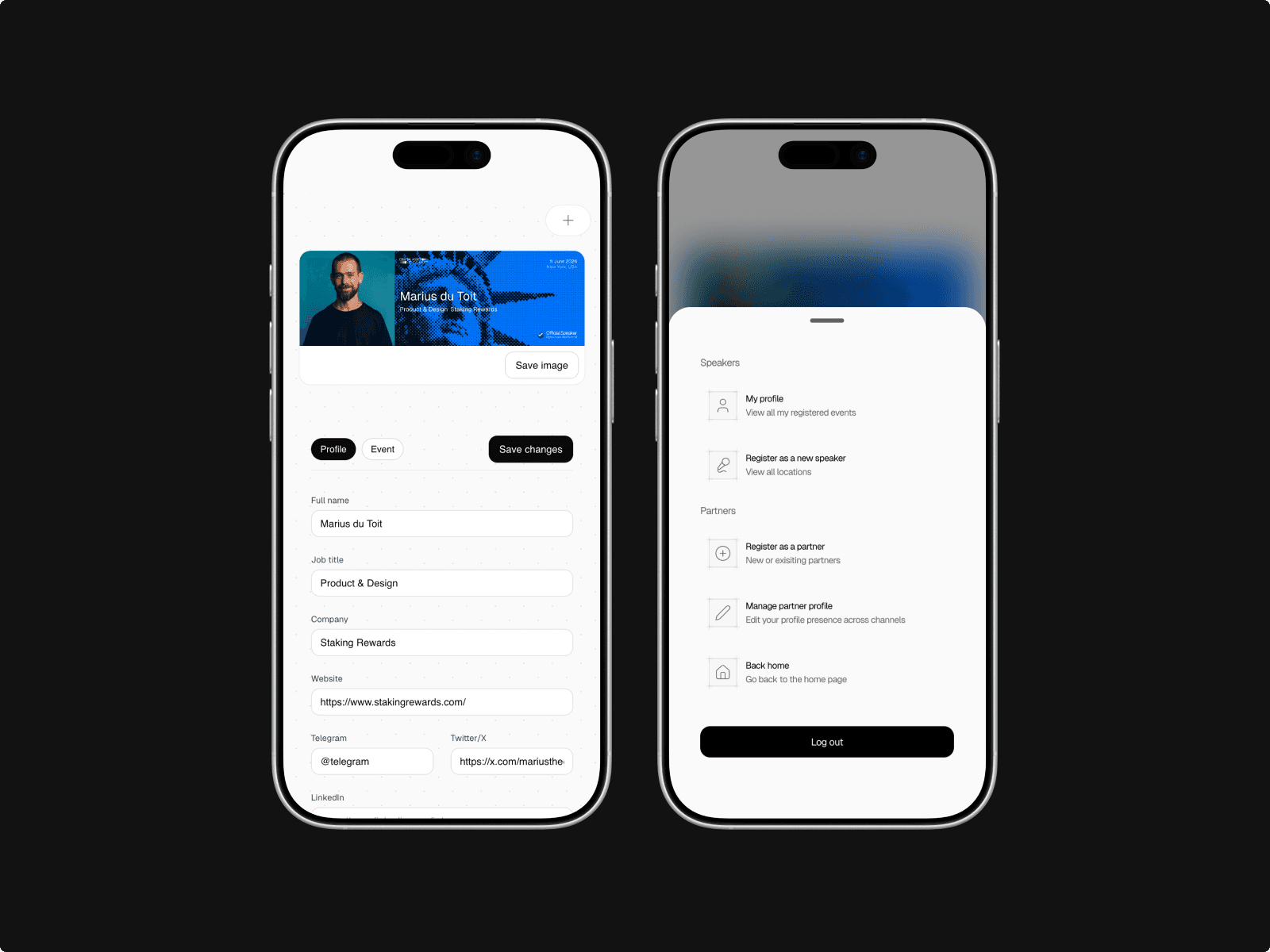
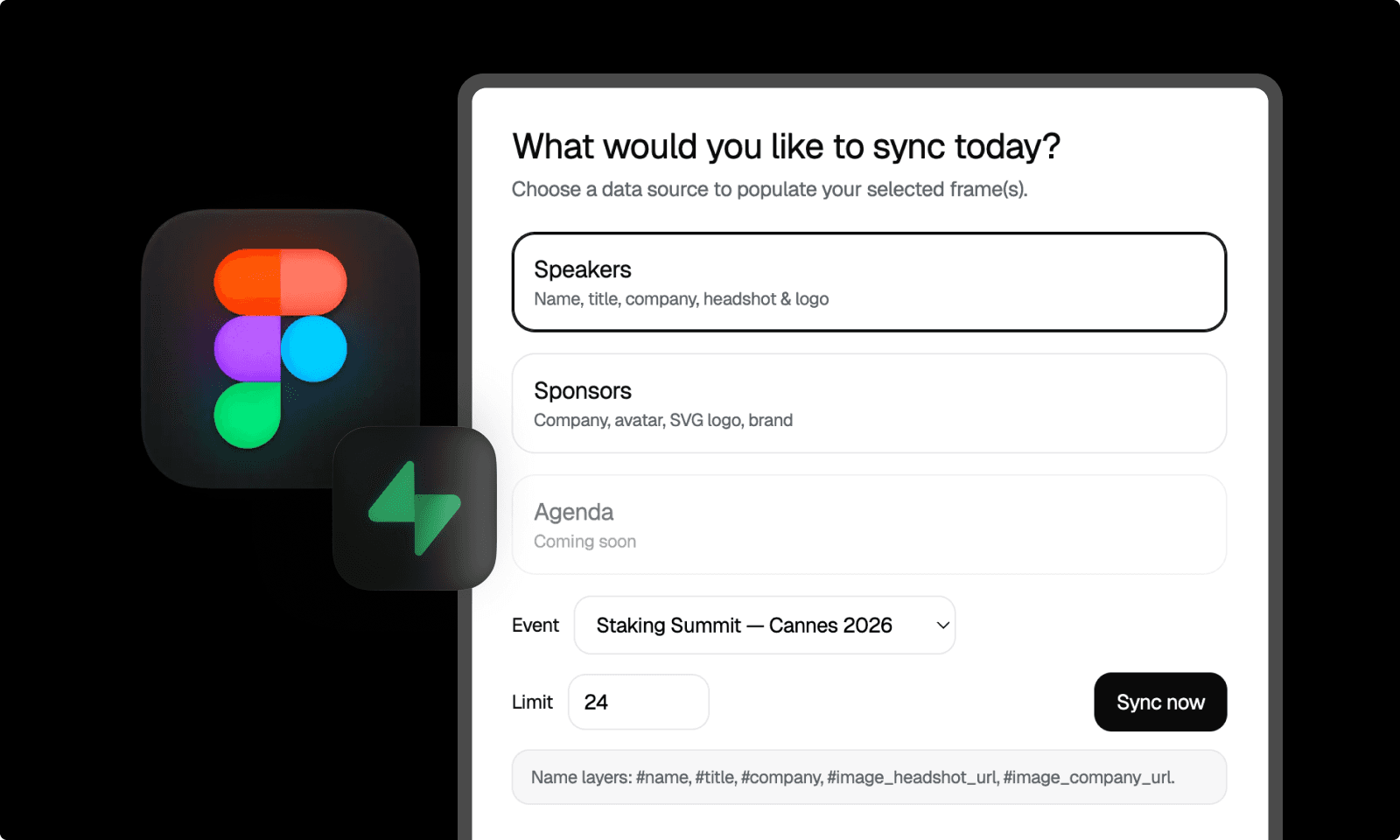
The Summit has operated across multiple cities and regions, each with distinct venues, teams, and production realities. The design system was built to absorb this variation without resetting identity or structure from one location to the next. By maintaining consistent visual logic and layout principles, each edition feels part of a continuous platform rather than a sequence of isolated events. Scale becomes reinforcement rather than dilution.
RESULTS
Large-format assets, stage systems, and on-site materials were deployed with minimal production inconsistencies, reflecting a repeatable design and asset structure across venues.
Standardised layouts and reusable templates reduced iteration cycles between design and production teams, enabling faster deployment without compromising consistency.
Each Summit brought together infrastructure providers, allocators, and long-term participants, reinforcing the platform’s role as a serious industry gathering rather than a broad retail conference.
The Summit operated across multiple cities while retaining a shared visual and operational framework.
Staking Summit demonstrates how design can operate as infrastructure rather than surface. The work required aligning brand, product thinking, and operational systems in an environment where clarity, trust, and execution matter as much as visual quality. By focusing on first principles and long-term reuse, the Summit evolved into a platform that could support multiple cities, audiences, and stakeholders without fragmenting or losing coherence.
Design decisions were made with durability in mind, ensuring the system could adapt as the ecosystem, scale, and operational demands changed over time. This project reflects my approach to design leadership. I work to establish foundations that reduce complexity, support teams in real conditions, and enable growth without constant reinvention. Staking Summit is not a one-off event, but a living system designed to hold up under scale, pressure, and change.